The median sold price is up 13.6% year-to-date. Foreclosure sales were 22% of all sales this month, down from 33% in April, and had a median sale price of just $43,000 compared to $146,500 for non-foreclosure sales.
Uncategorized
Custom Build Here ~ Beautiful Farm
| 12.43 +/- farm in East Vineland. Three road frontages, level topography. Perfect for horse farm. 60 x 90 pole barn with riding rink and a 36 x 60 horse barn with nine 10 x 12 stalls. Convenient access to Route 55, 47, 552 and 49. Property consists of 11.94 acres Q Farm of total 12.43 acres.
Give call today to find out mor information about this unique property. Stacy 856-364-0772 This listing presented by The Scott Sheppard Team |
Why You Should Sell Your Home in 2018
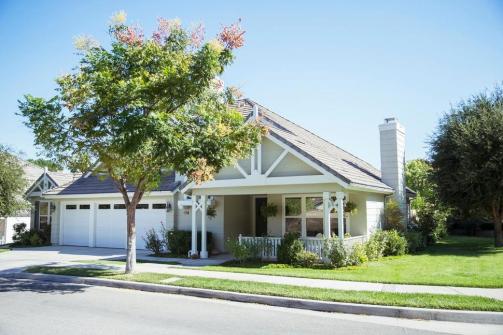
Thinking of selling your home? We have pre-approved buyers waiting for a beautiful home like yours to become available! Our listings on average selling between 95 and 100% of the sales price within less than 30 days. Feel free to give us a call today.
W. Scott Sheppard Team ~ Stacy Schnell 856-364-0772
If you haven’t given much thought to selling your home this year, you might want to think again.
Real estate information company Trulia commissioned a survey of more than 2,000 U.S. adults, conducted by Harris Poll, to get a feel for expectations and plans for housing and homeownership in 2018. The survey results show 31 percent of respondents expect 2018 to be a better year for selling a home than 2017 – and just 14 percent expect it to be worse.
Despite the enthusiasm, only 6 percent of homeowners surveyed plan to sell their home in 2018.
Real estate information company Zillow echoes these sentiments in its predictions for 2018, expecting inventory shortages to continue to drive the housing market. With too few homes on the market to meet buyer demand, prices increase and would-be buyers can’t afford the price or down payment needed to submit a winning offer.
If you’re a homeowner and have been thinking about selling, what are you waiting for? You may not consider 2018 to be your year to sell, but here are four reasons why selling in the next 12 months could be more beneficial than you think.
Buyers are chomping at the bit. Eager homebuyers have been frustrated over the last few years, experiencing low inventory in most major markets, which is pushing them to start home shopping earlier in the year to try to beat out the competition and ensure they’re not missing out on any available properties.
Even before the clock struck midnight on New Year’s, people were already getting a head start on looking at buying or selling a home in 2018. Real estate information company HomeLight saw a 25 percent traffic spike on its website on Dec. 26, with continued high rates of traffic through the first part of the new year.
“Folks have generally turned their attention away from the holiday and time with family and friends, and moved onto the new year and what they want to accomplish,” says Sumant Sridharan, chief operating officer of HomeLight. “And for many people, that tends to be where they want to live.”
The best time to sell your home is traditionally between March and June, Sridharan notes, while warmer climates may see a longer time frame because they’re not restricted by weather. But cold weather isn’t keeping interested buyers from starting their home search at the start of the year. The fact that buyers take the day after a major holiday to start looking for new home means the traditional selling season could be even hotter.
And while the last couple years have proven beneficial for sellers, seeing many homes sell for asking price or above, it won’t last forever. Zillow predicts home builders will begin looking to construct more entry-level homes to meet demand later this year. If you wait too long to put your home on the market, you may find yourself competing with new builds that haven’t been a part of the market in large numbers since before the recession.
Interest rates are low … for now. For both the buyer of your home and your own next home purchase, low interest rates can help make a transaction possible. In the second week of January, the average interest rate for a 30-year fixed-rate mortgage was 4.17 percent, according to NerdWallet. Mortgage rate averages reached more than 4.4 percent in 2017, but closed the year out just below the current rate.
While mortgage rates aren’t expected to spike significantly this year, they are forecast to increase overall. The Mortgage Bankers Association predicts 30-year fixed-rate mortgages will rise to 4.6 percent this year, and it expects rates to rise to 5 percent in 2019 and 5.3 percent in 2020.
While increasing interest rates are a sign of a good economy, they can squeeze out some potential homebuyers from the market. The current low rates can serve as a catalyst for many potential homebuyers to get moving sooner rather than later. But as interest rates continue to rise, you’re less likely to see as many bidding wars – which is welcome news for buyers but not sellers.
RELATED CONTENT
How the New Tax Law Will Affect Homeowners
You can move to find cheaper property taxes. The passing of the Tax Cuts and Jobs Act at the end of 2017 means a few significant home-related tax policy changes for the 2018 calendar year: Mortgage interest rates are only deductible up to $750,000 in debt and property taxes are only deductible up to $10,000.
While these limits don’t affect all homeowners, people who live in counties and cities with high property taxes are likely to feel the financial hit when they file taxes in 2019. If your household is going to struggle without the deductions you’ve had previously, it might be time to look elsewhere.
“For most of the world, I think it really creates a consideration of where I want to be and how I want to be there,” says Cody Vichinsky, co-founder of Bespoke Real Estate, based in Water Mill, New York.
Vichinsky expects housing markets in coastal states to be most impacted by the tax reform– and more specifically in the counties or towns with high-ranked school districts because their property taxes tend to be higher. While homeowners with school-age children may see the education factor weigh heavier than the financial burden, “You’re going to see an exodus out of these neighborhoods for people who don’t need to be there anymore,” he says.
You certainly shouldn’t have a hurried reaction to a policy change with an asset as large as a house, but also keep in mind that if you’re looking for the maximum price on your home, the longer the new tax law sinks in, the more likely it is to change feelings toward pricier neighborhoods in coastal markets.
“We do expect, potentially, in the longer term there may be lower demand at the higher price points because the tax [incentives] just aren’t there,” Sridharan says.
Renovations today won’t come back in full next year. Zillow’s 2018 predictions include the expectation that most homeowners will focus on renovations and updates this year rather than selling. If you’ve got remodeling on your schedule for the year, be sure it’s an update for you because it’s unlikely that renovations will have a 100 percent return when it comes time to sell.
“You’re going to get one shot at this,” Sridharan says. “Ultimately the additional money you’re going to spend to make your home look amazing is going to be far less than the amount of money [a buyer will pay].”
The key to taking advantage of the seller’s market this year is not taking the tight inventory for granted. Buyers will still expect effort from sellers in preparing a property for sale. While they may be willing to overlook a dated kitchen, it’s the clutter, deferred maintenance and lack of curb appeal that can still kill a deal. If you do decide put your house on the market, take the process seriously, and you’re likely to see ample interest.
10 SECRETS TO SELLING YOUR HOME FASTER
(Getty Images)
Time your listing for a fast sale.
Selling your home quickly not only allows you to move on with your life, it also means fewer days of keeping your home in pristine condition and leaving every time your agent brings prospective buyers for a tour. Real estate information company Zillow crunched data from 2008 to 2016 and found the optimum time to list a home for sale was on a Saturday between May 1 and 15 – at least looking at national numbers. Homes listed during those times sold nine days faster and for 0.8 percent more than the average annual home price, according to Zillow’s analysis. In more moderate climates, the optimum time came in March or April.
(Getty Images)
Timing isn’t everything when selling your home.
As you list your home, remember those numbers are historical averages and this spring may be different. “With 3 percent fewer homes on the market than last year, 2017 is shaping up to be another competitive buying season,” Zillow chief economist Svenja Gudell said in a news release. “Many homebuyers who started looking for homes in the early spring will still be searching for their dream home months later.” But how fast your home actually sells, and at what price, depends on a lot more factors than when you list it. A National Association of Realtors survey published late last year found that the average home was on the market a month in 2016, down from 11 weeks in 2012.
Here are 10 secrets to selling your home faster, no matter when you list it.
(Getty Images)
Take great photos.
According to an NAR survey, 51 percent of homebuyers found the house they eventually bought online and 95 percent used the internet in their home search. If your listing photos don’t show off the features of your home, prospective buyers may reject it without even taking a tour or going to the open house. Hiring a professional photographer and posting at least 30 photos of your home, inside and out, is a good way to attract a buyer.
(People Images/ Getty Images)
Clean everything.
Nothing turns off buyers like a dirty house. Hire a company to deep clean if you can’t do it yourself. That includes washing windows inside and out, removing any clutter and cleaning the garage, basement, baseboards, ceilings and closets – and anywhere else the buyer can see.
(Getty Images)
Depersonalize the home.
Remove all your family photos and memorabilia. You want buyers to see the house as a home for their family, not yours. Remove political and religious items, your children’s artwork (and everything else) from the refrigerator and anything that marks the house as your territory rather than neutral territory.
(Getty Images)
Let the light in.
People love light and bright, and the best way to show off your house is to let the sunshine in. Open all the curtains, blinds and shades, and turn lights on in any dark rooms. If your house is on a lockbox and your real estate agent isn’t going to be there to open blinds and turn on lights before showings, leave everything open when you leave for work every morning.
(Getty Images)
Make your home available.
Buyers like to see homes on their schedule, which often means evenings and weekends. Plus, they want to be able to tour a home soon after they find it online, especially in a hot market where they’re competing with other buyers. If your home can be shown with little or no notice, more prospective buyers will see it. If you require 24 hours’ notice, they are likely to see and perhaps choose others homes first.
(Getty Images)
Set the right price.
No seller wants to leave money on the table, but the strategy of setting an unrealistically high price with the idea you can come down later doesn’t work in real estate. Buyers and their agents have access to more information than ever, and they know what most homes are worth before viewing them. A home that’s overpriced tends to stay on the market longer, even after the price is cut, because buyers think there must be something wrong with it. Set the right price from the beginning, otherwise you might cost yourself precious time and money.
(Getty Images)
Remove excess furniture and clutter.
Nothing makes a home seem smaller than too much big furniture. Rent a PODS self-storage container or a storage unit and remove as much furniture as you can. It will immediately make your home seem calmer and larger. Remove knickknacks from all surfaces, pack them away and store the pieces upon which you displayed them. Take a minimalist approach to books, CDs, throw rugs and draperies, and clear off your kitchen and bathroom countertops, even appliances you normally use. If you can remove half the stuff in your closets, that’s even better, because it makes the home’s storage space look more ample.
(Getty Images)
Spread the word.
Your neighbors are often the best salespeople for your home because they love the neighborhood. Make sure they know your home is for sale and are invited to your open house. Share your listing on social media and ensure your agent does the same. Put flyers on neighborhood bulletin boards and share the news on neighborhood email lists and Facebook groups. If you have the skills, make a video to tell the story of how much you love the house and the neighborhood and put it up on YouTube.
(Getty Images)
Repaint in neutral colors.
A coat of paint will do wonders to freshen up your home, both inside and out. This is the time to paint over your daughter’s purple bedroom and cover up your red dining room accent wall. You want to create a neutral palette where buyers can envision putting their own personal touches. Warm neutrals such as gray, taupe and cream are better than bright white.
(Getty Images)
Spruce up the front of your home.
You’ve heard it 100 times before, and it’s still true: Curb appeal matters. You don’t get a second chance to make a first impression. A new or freshly painted front door, new house numbers and a new mailbox can breathe life into your entryway. Fresh landscaping and flowers in beds or in pots also enhance your home’s first impression. Trim trees and bushes, and pressure wash walkways, patios and decks. Leave the outdoor lights on, too, because prospective buyers may drive by at night.
This excerpt from US News. Please click here to read more.
Looking to sell? Upgrades that deliver the most value (cost vs. value)
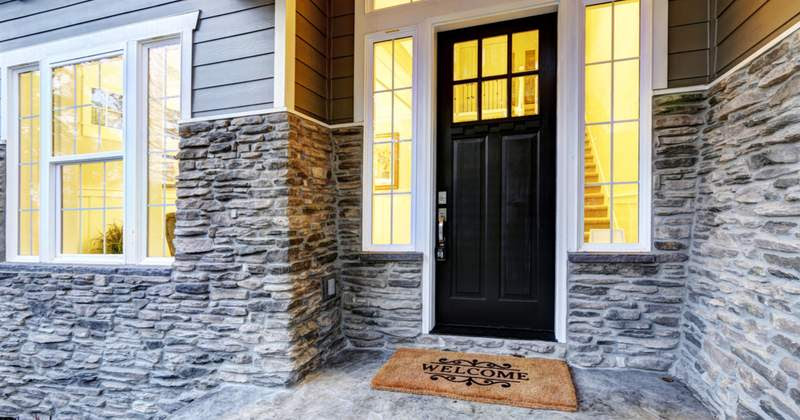
There’s no doubt that home improvement projects can add significant value to your home, but not all upgrades are a worthwhile investment. While some projects will basically pay for themselves, others won’t even get close — coming in at a loss.
If you want to improve your home’s aesthetic while also boosting its value for a future sale, you’ll want to choose your projects carefully. Make sure to heed these stats before deciding which ones to tackle.
Highest ROI Home Improvement Projects
Your best bet: Focus on curb appeal. Upgrades to exterior areas saw serious growth over the last year. Wood deck additions, stone veneer installation and new garage doors offer the highest return on your investment.
- Garage Door Replacement: Average Cost $3,470 | Cost Recouped 98.3 percent
- Manufactured Stone Veneer: Average Cost $8,221 | Cost Recouped 97.1 percent
- Steel Entry Door Replacement: Average Cost $1,471 | Cost Recouped 91.3 percent
- Wood Deck Addition: Average Cost $10,950 | Cost Recouped 82.8 percent.
Lowest ROI Home Improvement Projects:
What projects might be best to skip? On average, backyard patios, master suite additions and major kitchen remodels net low returns.
- Backyard Patio: Average Cost $54,130 | Cost Recouped 47.6 percent
- Master Suite Addition: Average Cost $256,229 | Cost Recouped 48.3 percent
- Major Kitchen Remodel: Average Cost $125,721 | Cost Recouped 53.5 percent
- Bathroom Addition: Average Cost $83,869 | Cost Recouped 54.6 percent
As you can see, there’s a pretty big difference in the projects that deliver and the ones that just don’t measure up. Make sure to do your research and choose your home improvement projects carefully before moving forward — especially if you plan to sell your home down the line.
Thing about selling your home? The W. Scott Sheppard team is always here to help! Call today for your free home evaluation. Stacy 856-364-0772
Home For Sale in desirable Pittsgrove
Welcome to this beautifully maintained, 3 bed, 2 full bath home located on a corner lot in a quiet neighborhood in Pittsgrove Township. This home would be ideal for a first-time homebuyer or a couple looking to downsize. The living room and eat-in kitchen have an open layout, so it’s perfect for entertaining. The master suite offers a full, updated bathroom, and is located away from the other 2 bedrooms for additional privacy. The basement is finished for additional living space, and there are 2 additional rooms in the basement that could be utilized as either additional bedrooms, living spaces or extra storage. The fenced-in backyard is very spacious and offers a deck off of the back door. Access to Rt. 40 & 55 is within 10 minutes. This home is eligible for 100% USDA financing!
Call today for more information or to schedule your
own private tour! 856-364-0772 Stacy
This listing brought to you by The Scott SHeppard Team
Have a Great Memorial Day Weekend!

|
How to improve my credit score

- Keep balances low on credit cards and other “revolving credit”. …
- Pay off debt rather than moving it around. …
- Don’t close unused credit cards as a short-term strategy to raise your scores.
- Don’t open a number of new credit cards that you don’t need, just to increase your available credit.
If time is a factor, here are four ways to improve a credit score in 30 days:
- Correct any errors on the credit report. …
- Become an authorized user. …
- Raise your available credit. …
- Negotiate. …
- 1. Make minimum payments on time. …
- Reduce debt-to-income ratio. …
- Have a good mix of debt.
Call today for more information on how to get yourself prepared to purchase a
Looking to sell your home? Now is the time.
A decade ago, the housing sector was in a mess. The mistakes of easy subprime lending resulted ultimately in the catastrophic collapse of the housing sector. Home values collapsed by a third nationwide, and the inventory of unsold homes spiked to unprecedented heights. Miami, for example, at one point was said to have 30 years of housing inventory.
Fortunately, after many years of sobering up, with proper lending and consistent job creations in the economy, the housing market has regained some health, with higher home sales and a very low foreclosure rate. However, the industry today is facing a different kind of crisis: not enough homes for sale.
The inventory of homes on the market last year in 2017 was one of the tightest ever. In early 2018, it is even worse. In the first quarter, the number of homes on the market averaged 1.59 million, which is down 8.4% from the same period one year ago. Strictly focusing on single-family home listings, this is the lowest inventory since the tracking of the data from the early 1980s.
This article from Forbes CLICK HERE to read more
Thinking of selling your home? Now is the time. Call or text today to schedule your consultation.
Stacy Schnell ~ 856-364-0772 / stacy.schnell@foxroach.com / http://www.stacyschnell.com
Can I qualify for an FHA loan?
What is an FHA Loan?
An FHA loan is a mortgage that’s insured by the Federal Housing Administration (FHA). They are popular especially among first time home buyers because they allow down payments of 3.5% for credit scores of 580+. However, borrowers must pay mortgage insurance premiums, which protects the lender if a borrower defaults.
Borrowers can qualify for an FHA loan with a down payment as little as 3.5% for a credit score of 580 or higher. The borrower’s credit score can be between 500 – 579 if a 10% down payment is made. It’s important to remember though, that the lower the credit score, the higher the interest borrowers will receive.
The FHA program was created in response to the rash of foreclosures and defaults that happened in 1930s; to provide mortgage lenders with adequate insurance; and to help stimulate the housing market by making loans accessible and affordable for people with less than stellar credit or a low down payment. Essentially, the federal government insures loans for FHA-approved lenders in order to reduce their risk of loss if a borrower defaults on their mortgage payments.
FHA Loan Requirements
For borrowers interested in buying a home with an FHA loan with the low down payment amount of 3.5%, applicants must have a minimum FICO score of 580 to qualify. However, having a credit score that’s lower than 580 doesn’t necessarily exclude you from FHA loan eligibility. You just need to have a minimum down payment of 10%.
The credit score and down payment amounts are just two of the requirements of FHA loans. Here’s a complete list of FHA loan requirements, which are set by the Federal Housing Authority:
- Borrowers must have a steady employment history or worked for the same employer for the past two years.
- Borrowers must have a valid Social Security number, lawful residency in the U.S. and be of legal age to sign a mortgage in your state.
- Borrowers must pay a minimum down payment of 3.5 percent. The money can be gifted by a family member.
- New FHA loans are only available for primary residence occupancy.
- Borrowers must have a property appraisal from a FHA-approved appraiser.
- Borrowers’ front-end ratio (mortgage payment plus HOA fees, property taxes, mortgage insurance, homeowners insurance) needs to be less than 31 percent of their gross income, typically. You may be able to get approved with as high a percentage as 40 percent. Your lender will be required to provide justification as to why they believe the mortgage presents an acceptable risk. The lender must include any compensating factors used for loan approval.
- Borrowers’ back-end ratio (mortgage plus all your monthly debt, i.e., credit card payment, car payment, student loans, etc.) needs to be less than 43 percent of their gross income, typically. You may be able to get approved with as high a percentage as 50 percent. Your lender will be required to provide justification as to why they believe the mortgage presents an acceptable risk. The lender must include any compensating factors used for loan approval.
- Borrowers must have a minimum credit score of 580 for maximum financing with a minimum down payment of 3.5 percent.
- Borrowers must have a minimum credit score of 500-579 for maximum LTV of 90 percent with a minimum down payment of 10 percent. FHA-qualified lenders will use a case-by-case basis to determine an applicants’ credit worthiness.
- Typically borrowers must be two years out of bankruptcy and have re-established good credit. Exceptions can be made if you are out of bankruptcy for more than one year if there were extenuating circumstances beyond your control that caused the bankruptcy and you’ve managed your money in a responsible manner.
- Typically borrowers must be three years out of foreclosure and have re-established good credit. Exceptions can be made if there were extenuating circumstances and you’ve improved your credit. If you were unable to sell your home because you had to move to a new area, this does not qualify as an exception to the three-year foreclosure guideline.
- The property must meet certain minimum standards at appraisal. If the home you are purchasing does not meet these standards and a seller will not agree to the required repairs, your only option is to pay for the required repairs at closing (to be held in escrow until the repairs are complete).
Benefits of FHA Loans: Low Down Payments and Less Strict Credit Score Requirements
Typically an FHA loan is one of the easiest types of mortgage loans to qualify for because it requires a lowdown payment and you can have less-than-perfect credit. For FHA loans, down payment of 3.5 percent is required for maximum financing. Borrowers with credit scores as low as 500 can qualify for an FHA loan.
Borrowers who cannot afford a 20 percent down payment, have a lower credit score, or can’t get approved for private mortgage insurance should look into whether an FHA loan is the best option for their personal scenario.
Another advantage of an FHA loan it is an assumable mortgage which means if you want to sell your home, the buyer can “assume” the loan you have. People who have low or bad credit, have undergone a bankruptcy or have been foreclosed upon may be able to still qualify for an FHA loan.
Mortgage Insurance is Required for an FHA Loan
You knew there had to be a catch, and here it is: Because an FHA loan does not have the strict standards of a conventional loan, it requires two kinds of mortgage insurance premiums: one is paid in full upfront -– or, it can be financed into the mortgage –- and the other is a monthly payment. Also, FHA loans require that the house meet certain conditions and must be appraised by an FHA-approved appraiser.
Upfront mortgage insurance premium (UFMIP) — Appropriately named, this is a one-time upfront monthly premium payment, which means borrowers will pay a premium of 1.75% of the home loan, regardless of their credit score. Example: $300,000 loan x 1.75% = $5,250. This sum can be paid upfront at closing as part of the settlement charges or can be rolled into the mortgage.
This excerpt from Zillow to Read more on how to qualify simply CLICK HERE
How to qualify for a VA loan
To be eligible for a VA Loan, veterans, active duty service members, National Guard members and reservists must meet the basic service requirements set forth by the Department of Veterans Affairs. Spouses of military members who died while on active duty or as a result of a service-connected disability may also be eligible.
It’s ultimately up to the VA to determine eligibility for the home loan program, but prospective borrowers can get a good idea by looking at the VA’s basic eligibility guidelines.
You may be eligible for a VA Home Loan if you meet one or more of the following conditions:
- You have served 90 consecutive days of active service during wartime,OR
- You have served 181 days of active service during peacetime,OR
- You have more than 6 years of service in the National Guard or Reserves,OR
- You are the spouse of a service member who has died in the line of duty or as a result of a service-related disability.
How to Apply for a VA Loan Certificate of Eligibility (COE)
While you don’t need your VA Certificate of Eligibility in hand to start the loan process with Veterans United, this certificate is a very important part of your loan application. Your COE verifies that your length and character of service make you eligible to use the VA home loan benefit.
You can apply for a VA Loan Certificate of Eligibility three different ways:
- Apply through a VA approved lender
- Apply online through the VA’s eBenefits portal
- Apply by mail with VA Form 26-1880
This exerpt from veteransunited.com
 Welcome to my Real Estate Blog