
Come join us in Pittsgrove, NJ – located in Salem County
April 27, 2022 5:15 AM EDT
Fed Chair Jerome Powell has made it clear: The central bank is done sitting on the sidelines as inflation chips away at the value of the dollar. The plan? Put upward pressure on interest rates until price growth relents.

Historically speaking, that inflation fighting playbook is particularly hard-felt in the housing market, where spiking mortgage rates can quickly price out homebuyers. That’s already starting to happen. On Thursday, the average 30-year fixed mortgage rate hit 5.11%—up from 3.11% in December. A borrower who took out a $500,000 mortgage at a 3.11% rate would owe $2,138 per month. At a 5.11% rate, that monthly payment on a 30-year mortgage spikes to $2,718.
While the swift move up in mortgage rates is undoubtedly putting downward pressure on the housing market, it doesn’t mean home prices are about to crash. In fact, every major real estate firm with a publicly released forecast model, including Fannie Mae and Zillow, still predicts home prices will climb further this year.
That said, industry insiders tell Fortune there’s increasingly a chance that the economic shock caused by soaring mortgage rates could see home values fall in some overpriced housing markets.
To better understand which regional housing markets might see a price decline, Fortune reached out to CoreLogic. The California-based real estate research company provided us with its assessment of close to 400 metropolitan statistical areas.
CoreLogic, which ranks No. 952 on the Fortune 1000, put housing markets into one of five categories based on the likelihood that home prices in that particular market are to fall over the coming 12 months. Here are those groupings:
Among the 392 regional housing markets that CoreLogic measured, it puts 86% into the “very low” or “low” likelihood of a price decline. It put 10% of markets into the “medium” grouping and 1% in the “high” grouping. Meanwhile, CoreLogic places only 2% of markets into the “elevated” group. The markets in the elevated grouping—the highest odds of a price correction—include Hartford; Kalamazoo; Lewiston, Maine; Mount Vernon, Wash.; Muskegon, Mich.; Olympia, Wash.; Salem, Ore.; and Honolulu.
Even in the face of soaring mortgage rates, CoreLogic still thinks the chances of prices declining in 2022 are fairly low.
This excerpt from Fortune.com

The final walkthrough is usually one of the last steps in purchasing a new home. This is also the time when buyers and their agents must have a watchful eye as they check on the condition of the property before they head to closing and make everything official.
This excerpt from Realtor magazine. To read more click the link below;
https://magazine.realtor/daily-news/2019/11/26/3-things-to-spot-during-a-final-walkthrough
Visit my website anytime for more tips on buying and selling your home.
Give me a call to see what your home is worth, invest in real estate or buy your new home!
Stacy Schnell
Realtor Salesperson –
Direct: 856-364-0772
The Scott Sheppard Team
Email: Stacy.Schnell@foxroach.com
Current rates in New Jersey are 4.081% for a 30-year fixed, 3.587% for a 15-year fixed, and 4.017% for a 5/1 adjustable-rate mortgage (ARM).
Mortgage Rates See Biggest One-Week Drop in a Decade. Mortgage rates fell more in the past week than they have in any one-week period in more than a decade. The average 30-year fixed loan has dropped 22 basis points to 4.06%, while 15-year fixed loans are down 14 basis points to 3.57%, according to Freddie Mac.Mar 28, 2019
Compare today’s average mortgage rates in the state of New Jersey. Bankrate aggregates mortgage rates from multiple sources to provide averages for New Jersey.
To Read more CLICK HERE

(TNS)—Economic gurus got one part of the mortgage forecast for 2019 correct. We’re certainly seeing a volatile year for rates.
What they didn’t see coming: Mortgage rates tumbled in March, the biggest one-week fall in a decade. Now—instead of seeing mortgage rates edge closer to 5.25 percent, as some had predicted we’d see in 2019—we’re looking at an average 30-year rate near 4 percent.
The rate drop comes just in time for the spring home-buying season and will make monthly payments less expensive.
“This drop in rates is going to give the housing market a boost,” says Bill Banfield, executive vice president of Capital Markets for Quicken Loans. “It could help to make people come back into the market and consider buying a home.”
Mortgage rates have fallen by a full percentage point since late 2018. Going back four months or so, most forecasts weren’t expecting mortgage rates to drop as low as 4 percent for borrowers, Banfield says.
“This is a surprise to a lot of people,” Banfield says.
The average 30-year rate was 4.1 percent as of late March, the lowest rate since Jan. 2018, according to Bankrate.com data. But rates started to rebound a bit upward in early April. The average 30-year rate went back to 4.29 percent as of April 3, according to Bankrate.com.
By contrast, the average mortgage rate was 5.1 percent as recently as mid-November, which was a seven-year high, according to Bankrate.com. The average was hovering around 4.75 percent as 2018 drew to a close.
We’re talking about some real money here for homebuyers. Take a $200,000 mortgage. The mortgage payment for principal and interest would drop by about $120 a month if your rate is 4.1 percent instead of 5.1 percent on a 30-year mortgage, according to Greg McBride, chief financial analyst for Bankrate.com. For the mortgage alone, the payment would be about $966 month at the 4.1 percent rate. It’s sort of like getting more than one month free each year.
For a homebuyer who was priced out of the market last spring, the lower rates could help get them back in the game.
Being able to lock in a 30-year fixed rate near, or even below, 4 percent helps put some “wind in the sails of home buyers from an affordability standpoint,” McBride says.
The 30-year fixed rate mortgage remains the dominant loan for middle-class borrowers, particularly first-time home buyers.
This excerpt from : RIS Media.com TO READ MORE CLICK HERE
Stacy Schnell Real

According to fresh findings from realtor.com®, there’s been an improvement in inventory nationwide—but what does that mean for this spring?
Compared to Feb. 2018, there were 6 percent more homes on the market this year, equaling 73,000 more listings, according to the Feb. 2019 realtor.com report. Inventory in the largest markets opened up substantially, with the biggest leaps in the West: 125 percent more in San Jose year-over-year; 85 percent more in Seattle; and 53 percent more in San Francisco.
For homes in the $750,000 or more range, inventory picked up 11 percent year-over-year. The same couldn’t be said for the $200,000 or less segment, with 7 percent fewer listings on the market.
The imbalance is an issue for millennials and others in the starter tier, who’ll have less options in their search this spring.
This excerp from RIS Media. TO CONTINUE READING PLEASE CLICK HERE
Buying a home is probably the biggest investment you will make, with long-term financial ramifications. It calls for many informed decisions and for good advice from a real estate professional. Give me a call today for all of your real estate needs.
Stacy Schnell ~ Realtor Associate Direct: 856-364-0772
Berkshire Hathawaty Fox & Roach ~ The Scott Sheppard Team
Featuring 4 bedrooma and 3 Baths. This 2 story home is situated on quiet lot on cul-de-sac street in Millville, New Jersey. Completely updated kitchen has wood countertops, new stainless steel appliances, backsplash, freshly painted cabinets, breakfast nook, pantry closet, ceiling fan and double sink with garbage disposal. Kitchen opens up to dining area with a floor to ceiling stone wood burning fireplace and ceiling fan. Separate laundry room and family room off kitchen. Spacious and remodeled foyer entry with exposed wood walls and new flooring. Large master bedroom has cathedral ceilings, ceiling fan and a walk-in closet. Master bath has a double vanity, stall shower, soaking tub and tile flooring. Other features include a partially finished basement, insulated windows, natural gas heat with humidifier, central air, concrete driveway, rear deck, city water and sewer and a large rear yard with two sheds. Solar panels are leased and offer a great savings on your electric bill. Rieck Avenue elementary school. Convenient access to Routes 49, 47 and 55. This listing is presented by The Scott Sheppard Team. Call today for a tour or more information and ask about property #90. Or for more information about homes for sale in Cumberland County. Ask about our new $0 down FHA loans! Stacy Schnell ~ Realtor Associate Cell: 856-364-0772
Rising real estate costs, demographics shifts, and low inventory have hamstrung homebuyers for years. But according to Danielle Hale, chief economist for Realtor.com, this spring buying season may bring buyer frustration to a boil.
“I think it’s fair to say this is the most competitive housing market we’ve seen in recorded history,” says Hale. “There’s record low inventory and strong interest from buyers in getting into the housing market. There are a lot of buyers, and not a lot of sellers.”
According to Hale and other economists and real estate industry observers, many factors have created this “imperfect storm” of high demand and low supply. Underbuilding had been a key factor, due to cost, labor shortages, and zoning and regulatory barriers to new construction.
“We’ve been paying the bill for underbuilding for some time, and every year, it gets worse,” she says. “We’re not only not keeping up, we’re falling further behind.”
This excerpt taken from Curbed.com to read more please click HERE.
Thinking of selling your home? We have pre-approved buyers waiting for a beautiful home like yours to become available! Our listings on average selling between 95 and 100% of the sales price within less than 30 days. Feel free to give us a call today.
W. Scott Sheppard Team ~ Stacy Schnell 856-364-0772
If you haven’t given much thought to selling your home this year, you might want to think again.
Real estate information company Trulia commissioned a survey of more than 2,000 U.S. adults, conducted by Harris Poll, to get a feel for expectations and plans for housing and homeownership in 2018. The survey results show 31 percent of respondents expect 2018 to be a better year for selling a home than 2017 – and just 14 percent expect it to be worse.
Despite the enthusiasm, only 6 percent of homeowners surveyed plan to sell their home in 2018.
Real estate information company Zillow echoes these sentiments in its predictions for 2018, expecting inventory shortages to continue to drive the housing market. With too few homes on the market to meet buyer demand, prices increase and would-be buyers can’t afford the price or down payment needed to submit a winning offer.
If you’re a homeowner and have been thinking about selling, what are you waiting for? You may not consider 2018 to be your year to sell, but here are four reasons why selling in the next 12 months could be more beneficial than you think.
Buyers are chomping at the bit. Eager homebuyers have been frustrated over the last few years, experiencing low inventory in most major markets, which is pushing them to start home shopping earlier in the year to try to beat out the competition and ensure they’re not missing out on any available properties.
Even before the clock struck midnight on New Year’s, people were already getting a head start on looking at buying or selling a home in 2018. Real estate information company HomeLight saw a 25 percent traffic spike on its website on Dec. 26, with continued high rates of traffic through the first part of the new year.
“Folks have generally turned their attention away from the holiday and time with family and friends, and moved onto the new year and what they want to accomplish,” says Sumant Sridharan, chief operating officer of HomeLight. “And for many people, that tends to be where they want to live.”
The best time to sell your home is traditionally between March and June, Sridharan notes, while warmer climates may see a longer time frame because they’re not restricted by weather. But cold weather isn’t keeping interested buyers from starting their home search at the start of the year. The fact that buyers take the day after a major holiday to start looking for new home means the traditional selling season could be even hotter.
And while the last couple years have proven beneficial for sellers, seeing many homes sell for asking price or above, it won’t last forever. Zillow predicts home builders will begin looking to construct more entry-level homes to meet demand later this year. If you wait too long to put your home on the market, you may find yourself competing with new builds that haven’t been a part of the market in large numbers since before the recession.
Interest rates are low … for now. For both the buyer of your home and your own next home purchase, low interest rates can help make a transaction possible. In the second week of January, the average interest rate for a 30-year fixed-rate mortgage was 4.17 percent, according to NerdWallet. Mortgage rate averages reached more than 4.4 percent in 2017, but closed the year out just below the current rate.
While mortgage rates aren’t expected to spike significantly this year, they are forecast to increase overall. The Mortgage Bankers Association predicts 30-year fixed-rate mortgages will rise to 4.6 percent this year, and it expects rates to rise to 5 percent in 2019 and 5.3 percent in 2020.
While increasing interest rates are a sign of a good economy, they can squeeze out some potential homebuyers from the market. The current low rates can serve as a catalyst for many potential homebuyers to get moving sooner rather than later. But as interest rates continue to rise, you’re less likely to see as many bidding wars – which is welcome news for buyers but not sellers.
You can move to find cheaper property taxes. The passing of the Tax Cuts and Jobs Act at the end of 2017 means a few significant home-related tax policy changes for the 2018 calendar year: Mortgage interest rates are only deductible up to $750,000 in debt and property taxes are only deductible up to $10,000.
While these limits don’t affect all homeowners, people who live in counties and cities with high property taxes are likely to feel the financial hit when they file taxes in 2019. If your household is going to struggle without the deductions you’ve had previously, it might be time to look elsewhere.
“For most of the world, I think it really creates a consideration of where I want to be and how I want to be there,” says Cody Vichinsky, co-founder of Bespoke Real Estate, based in Water Mill, New York.
Vichinsky expects housing markets in coastal states to be most impacted by the tax reform– and more specifically in the counties or towns with high-ranked school districts because their property taxes tend to be higher. While homeowners with school-age children may see the education factor weigh heavier than the financial burden, “You’re going to see an exodus out of these neighborhoods for people who don’t need to be there anymore,” he says.
You certainly shouldn’t have a hurried reaction to a policy change with an asset as large as a house, but also keep in mind that if you’re looking for the maximum price on your home, the longer the new tax law sinks in, the more likely it is to change feelings toward pricier neighborhoods in coastal markets.
“We do expect, potentially, in the longer term there may be lower demand at the higher price points because the tax [incentives] just aren’t there,” Sridharan says.
Renovations today won’t come back in full next year. Zillow’s 2018 predictions include the expectation that most homeowners will focus on renovations and updates this year rather than selling. If you’ve got remodeling on your schedule for the year, be sure it’s an update for you because it’s unlikely that renovations will have a 100 percent return when it comes time to sell.
“You’re going to get one shot at this,” Sridharan says. “Ultimately the additional money you’re going to spend to make your home look amazing is going to be far less than the amount of money [a buyer will pay].”
The key to taking advantage of the seller’s market this year is not taking the tight inventory for granted. Buyers will still expect effort from sellers in preparing a property for sale. While they may be willing to overlook a dated kitchen, it’s the clutter, deferred maintenance and lack of curb appeal that can still kill a deal. If you do decide put your house on the market, take the process seriously, and you’re likely to see ample interest.
(Getty Images)
Selling your home quickly not only allows you to move on with your life, it also means fewer days of keeping your home in pristine condition and leaving every time your agent brings prospective buyers for a tour. Real estate information company Zillow crunched data from 2008 to 2016 and found the optimum time to list a home for sale was on a Saturday between May 1 and 15 – at least looking at national numbers. Homes listed during those times sold nine days faster and for 0.8 percent more than the average annual home price, according to Zillow’s analysis. In more moderate climates, the optimum time came in March or April.
(Getty Images)
As you list your home, remember those numbers are historical averages and this spring may be different. “With 3 percent fewer homes on the market than last year, 2017 is shaping up to be another competitive buying season,” Zillow chief economist Svenja Gudell said in a news release. “Many homebuyers who started looking for homes in the early spring will still be searching for their dream home months later.” But how fast your home actually sells, and at what price, depends on a lot more factors than when you list it. A National Association of Realtors survey published late last year found that the average home was on the market a month in 2016, down from 11 weeks in 2012.
Here are 10 secrets to selling your home faster, no matter when you list it.
(Getty Images)
According to an NAR survey, 51 percent of homebuyers found the house they eventually bought online and 95 percent used the internet in their home search. If your listing photos don’t show off the features of your home, prospective buyers may reject it without even taking a tour or going to the open house. Hiring a professional photographer and posting at least 30 photos of your home, inside and out, is a good way to attract a buyer.
(People Images/ Getty Images)
Nothing turns off buyers like a dirty house. Hire a company to deep clean if you can’t do it yourself. That includes washing windows inside and out, removing any clutter and cleaning the garage, basement, baseboards, ceilings and closets – and anywhere else the buyer can see.
(Getty Images)
Remove all your family photos and memorabilia. You want buyers to see the house as a home for their family, not yours. Remove political and religious items, your children’s artwork (and everything else) from the refrigerator and anything that marks the house as your territory rather than neutral territory.
(Getty Images)
People love light and bright, and the best way to show off your house is to let the sunshine in. Open all the curtains, blinds and shades, and turn lights on in any dark rooms. If your house is on a lockbox and your real estate agent isn’t going to be there to open blinds and turn on lights before showings, leave everything open when you leave for work every morning.
(Getty Images)
Buyers like to see homes on their schedule, which often means evenings and weekends. Plus, they want to be able to tour a home soon after they find it online, especially in a hot market where they’re competing with other buyers. If your home can be shown with little or no notice, more prospective buyers will see it. If you require 24 hours’ notice, they are likely to see and perhaps choose others homes first.
(Getty Images)
No seller wants to leave money on the table, but the strategy of setting an unrealistically high price with the idea you can come down later doesn’t work in real estate. Buyers and their agents have access to more information than ever, and they know what most homes are worth before viewing them. A home that’s overpriced tends to stay on the market longer, even after the price is cut, because buyers think there must be something wrong with it. Set the right price from the beginning, otherwise you might cost yourself precious time and money.
(Getty Images)
Nothing makes a home seem smaller than too much big furniture. Rent a PODS self-storage container or a storage unit and remove as much furniture as you can. It will immediately make your home seem calmer and larger. Remove knickknacks from all surfaces, pack them away and store the pieces upon which you displayed them. Take a minimalist approach to books, CDs, throw rugs and draperies, and clear off your kitchen and bathroom countertops, even appliances you normally use. If you can remove half the stuff in your closets, that’s even better, because it makes the home’s storage space look more ample.
(Getty Images)
Your neighbors are often the best salespeople for your home because they love the neighborhood. Make sure they know your home is for sale and are invited to your open house. Share your listing on social media and ensure your agent does the same. Put flyers on neighborhood bulletin boards and share the news on neighborhood email lists and Facebook groups. If you have the skills, make a video to tell the story of how much you love the house and the neighborhood and put it up on YouTube.
(Getty Images)
A coat of paint will do wonders to freshen up your home, both inside and out. This is the time to paint over your daughter’s purple bedroom and cover up your red dining room accent wall. You want to create a neutral palette where buyers can envision putting their own personal touches. Warm neutrals such as gray, taupe and cream are better than bright white.
(Getty Images)
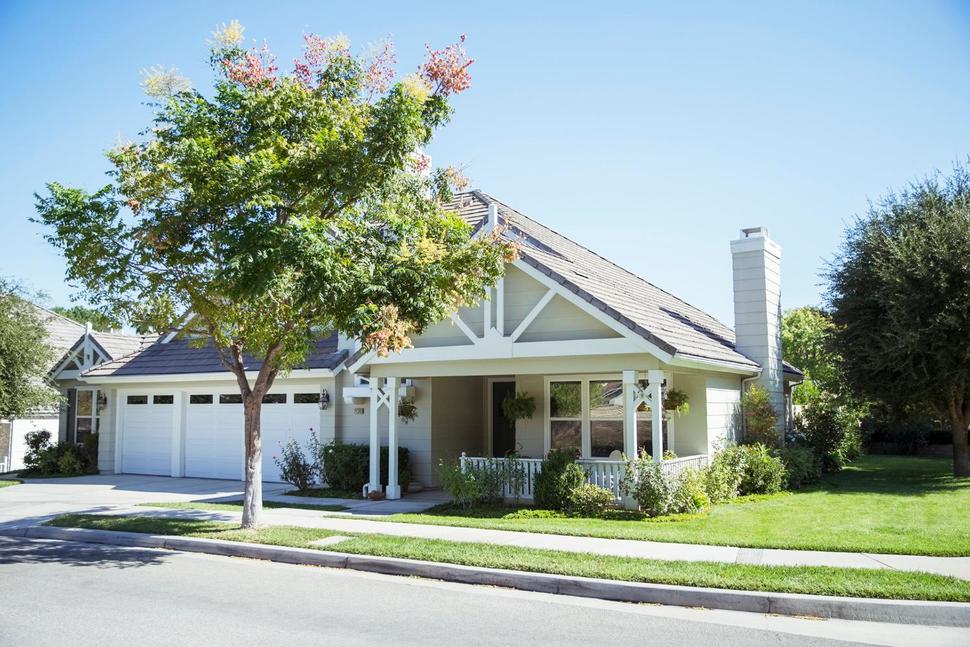
You’ve heard it 100 times before, and it’s still true: Curb appeal matters. You don’t get a second chance to make a first impression. A new or freshly painted front door, new house numbers and a new mailbox can breathe life into your entryway. Fresh landscaping and flowers in beds or in pots also enhance your home’s first impression. Trim trees and bushes, and pressure wash walkways, patios and decks. Leave the outdoor lights on, too, because prospective buyers may drive by at night.
This excerpt from US News. Please click here to read more.
 Welcome to my Real Estate Blog